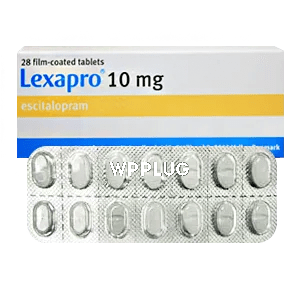
Lexapro
| Product dosage: 10mg | |||
|---|---|---|---|
| Package (num) | Per pill | Price | Buy |
| 10 | $4.50 | $45.00 (0%) | 🛒 Add to cart |
| 20 | $2.50 | $90.00 $50.00 (44%) | 🛒 Add to cart |
| 30 | $1.83 | $135.00 $55.00 (59%) | 🛒 Add to cart |
| 60 | $1.00 | $270.00 $60.00 (78%) | 🛒 Add to cart |
| 90 | $0.89 | $405.00 $80.00 (80%) | 🛒 Add to cart |
| 120 | $0.83 | $540.00 $100.00 (81%) | 🛒 Add to cart |
| 180 | $0.72 | $810.00 $130.00 (84%) | 🛒 Add to cart |
| 270 | $0.67 | $1215.00 $180.00 (85%) | 🛒 Add to cart |
| 360 | $0.60
Best per pill | $1620.00 $215.00 (87%) | 🛒 Add to cart |
| Product dosage: 20mg | |||
|---|---|---|---|
| Package (num) | Per pill | Price | Buy |
| 10 | $5.00 | $50.00 (0%) | 🛒 Add to cart |
| 20 | $2.75 | $100.00 $55.00 (45%) | 🛒 Add to cart |
| 30 | $2.00 | $150.00 $60.00 (60%) | 🛒 Add to cart |
| 60 | $1.33 | $300.00 $80.00 (73%) | 🛒 Add to cart |
| 90 | $1.11 | $450.00 $100.00 (78%) | 🛒 Add to cart |
| 120 | $1.00 | $600.00 $120.00 (80%) | 🛒 Add to cart |
| 180 | $0.89 | $900.00 $160.00 (82%) | 🛒 Add to cart |
| 270 | $0.81 | $1350.00 $220.00 (84%) | 🛒 Add to cart |
| 360 | $0.74
Best per pill | $1800.00 $265.00 (85%) | 🛒 Add to cart |
| Product dosage: 5mg | |||
|---|---|---|---|
| Package (num) | Per pill | Price | Buy |
| 10 | $4.00 | $40.00 (0%) | 🛒 Add to cart |
| 20 | $2.25 | $80.00 $45.00 (44%) | 🛒 Add to cart |
| 30 | $1.67 | $120.00 $50.00 (58%) | 🛒 Add to cart |
| 60 | $0.92 | $240.00 $55.00 (77%) | 🛒 Add to cart |
| 90 | $0.67 | $360.00 $60.00 (83%) | 🛒 Add to cart |
| 120 | $0.54 | $480.00 $65.00 (86%) | 🛒 Add to cart |
| 180 | $0.39 | $720.00 $70.00 (90%) | 🛒 Add to cart |
| 270 | $0.31 | $1080.00 $85.00 (92%) | 🛒 Add to cart |
| 360 | $0.26
Best per pill | $1440.00 $95.00 (93%) | 🛒 Add to cart |
Synonyms | |||
Lexapro: Effective SSRI Treatment for Depression and Anxiety
Lexapro (escitalopram oxalate) is a selective serotonin reuptake inhibitor (SSRI) approved by the FDA for the treatment of major depressive disorder (MDD) and generalized anxiety disorder (GAD) in adults and adolescents. As one of the most widely prescribed antidepressants globally, Lexapro works by increasing serotonin levels in the brain, which helps improve mood, reduce anxiety, and restore emotional balance. Its favorable side effect profile and demonstrated efficacy in clinical trials make it a first-line option for healthcare providers managing these common mental health conditions.
Features
- Active ingredient: Escitalopram oxalate
- Available in 5 mg, 10 mg, and 20 mg oral tablets
- Also available as a liquid solution (1 mg/mL)
- Selective serotonin reuptake inhibitor (SSRI) class
- FDA-approved for major depressive disorder and generalized anxiety disorder
- Bioavailability: approximately 80%
- Half-life: 27–32 hours
- Time to peak plasma concentration: 5 hours
- Metabolized primarily by the liver enzymes CYP2C19, CYP3A4, and CYP2D6
Benefits
- Effectively reduces symptoms of depression, including low mood, loss of interest, and fatigue
- Significantly decreases anxiety and worry associated with generalized anxiety disorder
- Lower incidence of drug interactions compared to some other SSRIs
- Generally well-tolerated with a manageable side effect profile
- Once-daily dosing supports treatment adherence
- Improves overall quality of life and functional outcomes in patients with mood and anxiety disorders
Common use
Lexapro is primarily indicated for the treatment of major depressive disorder (MDD) in adults and adolescents aged 12–17 years, as well as generalized anxiety disorder (GAD) in adults. It is often prescribed as a first-line pharmacological intervention due to its efficacy and tolerability. Clinicians may also use Lexapro off-label for other anxiety disorders, such as social anxiety disorder, panic disorder, and obsessive-compulsive disorder, though supporting evidence varies. Treatment is typically initiated at a low dose and titrated based on therapeutic response and side effects.
Dosage and direction
For major depressive disorder and generalized anxiety disorder in adults, the recommended starting dose is 10 mg once daily, which may be increased to 20 mg daily after a minimum of one week. For adolescents aged 12–17 with MDD, the starting dose is 10 mg daily, with a recommended dose of 10–20 mg daily. Lexapro may be taken with or without food. Tablets should be swallowed whole and not crushed or chewed. The oral solution should be measured with the provided dosing device. Dosage adjustments are necessary in patients with hepatic impairment, and a maximum dose of 10 mg daily is recommended in such cases.
Precautions
Patients should be monitored for clinical worsening, suicidality, or unusual changes in behavior, especially during the initial few months of therapy or following dosage changes. Lexapro may increase the risk of bleeding, particularly when used concomitantly with NSAIDs, aspirin, or other anticoagulants. Use with caution in patients with a history of seizures or conditions that predispose to seizures. SSRI treatment may precipitate a manic episode in patients with bipolar disorder; screening for bipolar disorder is recommended prior to initiation. Discontinuation symptoms may occur upon abrupt cessation; gradual tapering is advised.
Contraindications
Lexapro is contraindicated in patients taking monoamine oxidase inhibitors (MAOIs) or within 14 days of discontinuing MAOI treatment due to the risk of serotonin syndrome. Concomitant use with pimozide is contraindicated due to the potential for QT prolongation. It is also contraindicated in patients with known hypersensitivity to escitalopram, citalopram, or any component of the formulation.
Possible side effect
Common side effects include nausea, insomnia, ejaculation disorder, fatigue, drowsiness, increased sweating, and decreased libido. Less frequently, patients may experience dry mouth, constipation, dizziness, increased appetite, and anxiety. Serious but rare adverse effects include serotonin syndrome, abnormal bleeding, hyponatremia, angle-closure glaucoma, and QT interval prolongation. Sexual dysfunction, including anorgasmia and erectile dysfunction, may occur and persist in some patients.
Drug interaction
Lexapro should not be used with MAOIs due to the risk of serotonin syndrome. Concomitant use with other serotonergic drugs (e.g., tramadol, triptans, other SSRIs/SNRIs) may increase this risk. Drugs that inhibit CYP2C19 (e.g., omeprazole) or CYP3A4 (e.g., ketoconazole) may increase escitalopram levels. Lexapro may enhance the anticoagulant effect of warfarin. Use with drugs that prolong the QT interval (e.g., antipsychotics, antiarrhythmics) should be approached cautiously.
Missed dose
If a dose is missed, it should be taken as soon as remembered, unless it is close to the time of the next scheduled dose. In that case, the missed dose should be skipped, and the regular dosing schedule resumed. Doubling the dose to make up for a missed dose is not recommended.
Overdose
Symptoms of overdose may include dizziness, sweating, nausea, vomiting, tremor, somnolence, and sinus tachycardia. In severe cases, serotonin syndrome, seizures, coma, or ECG changes (including QT prolongation) may occur. There is no specific antidote; treatment is supportive and symptomatic. Gastric lavage and activated charcoal may be considered if presented early. ECG monitoring is advised.
Storage
Store Lexapro tablets and oral solution at room temperature (20°–25°C or 68°–77°F), with excursions permitted between 15°–30°C (59°–86°F). Keep the bottle tightly closed and protect from light and moisture. Keep out of reach of children and pets. Do not use beyond the expiration date printed on the packaging.
Disclaimer
This information is for educational purposes only and is not a substitute for professional medical advice, diagnosis, or treatment. Always seek the advice of your physician or other qualified health provider with any questions you may have regarding a medical condition or medication. Do not disregard professional medical advice or delay in seeking it because of something you have read here.
Reviews
Clinical studies and patient reports generally reflect positive experiences with Lexapro, noting its effectiveness in alleviating symptoms of depression and anxiety. Many users report improved mood, reduced anxiety, and better daily functioning within 4–6 weeks of consistent use. Some individuals mention side effects such as initial nausea or sexual dysfunction, though these often diminish over time. Adherence to prescribed dosing and regular follow-up with a healthcare provider are frequently emphasized for optimal outcomes.