
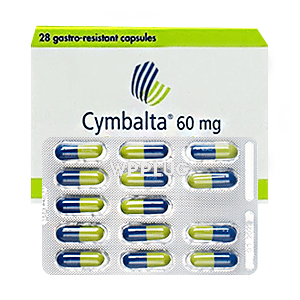
Cymbalta
Cymbalta heals depression, relieves peripheral neuropathic pains associated with diabetes.
| Product dosage: 20mg | |||
|---|---|---|---|
| Package (num) | Per pill | Price | Buy |
| 30 | $1.53 | $46.00 (0%) | 🛒 Add to cart |
| 60 | $1.08 | $92.00 $65.00 (29%) | 🛒 Add to cart |
| 90 | $0.92 | $138.00 $83.00 (40%) | 🛒 Add to cart |
| 120 | $0.84 | $184.00 $101.00 (45%) | 🛒 Add to cart |
| 180 | $0.77 | $276.00 $139.00 (50%) | 🛒 Add to cart |
| 270 | $0.72 | $414.00 $195.00 (53%) | 🛒 Add to cart |
| 360 | $0.69
Best per pill | $552.00 $249.00 (55%) | 🛒 Add to cart |
| Product dosage: 30mg | |||
|---|---|---|---|
| Package (num) | Per pill | Price | Buy |
| 30 | $2.50 | $75.00 (0%) | 🛒 Add to cart |
| 60 | $1.77 | $150.00 $106.00 (29%) | 🛒 Add to cart |
| 90 | $1.52 | $225.00 $137.00 (39%) | 🛒 Add to cart |
| 120 | $1.40 | $300.00 $168.00 (44%) | 🛒 Add to cart |
| 180 | $1.28 | $450.00 $230.00 (49%) | 🛒 Add to cart |
| 270 | $1.20
Best per pill | $675.00 $323.00 (52%) | 🛒 Add to cart |
| Product dosage: 40mg | |||
|---|---|---|---|
| Package (num) | Per pill | Price | Buy |
| 30 | $2.73 | $82.00 (0%) | 🛒 Add to cart |
| 60 | $1.97 | $164.00 $118.00 (28%) | 🛒 Add to cart |
| 90 | $1.70 | $246.00 $153.00 (38%) | 🛒 Add to cart |
| 120 | $1.57 | $328.00 $189.00 (42%) | 🛒 Add to cart |
| 180 | $1.44 | $492.00 $260.00 (47%) | 🛒 Add to cart |
| 270 | $1.37
Best per pill | $738.00 $369.00 (50%) | 🛒 Add to cart |
| Product dosage: 60mg | |||
|---|---|---|---|
| Package (num) | Per pill | Price | Buy |
| 30 | $3.37 | $101.00 (0%) | 🛒 Add to cart |
| 60 | $2.63 | $202.00 $158.00 (22%) | 🛒 Add to cart |
| 90 | $2.40 | $303.00 $216.00 (29%) | 🛒 Add to cart |
| 120 | $2.27 | $404.00 $273.00 (32%) | 🛒 Add to cart |
| 180 | $2.16 | $606.00 $388.00 (36%) | 🛒 Add to cart |
| 270 | $2.08
Best per pill | $909.00 $561.00 (38%) | 🛒 Add to cart |
Synonyms | |||
Similar products

Cymbalta: Comprehensive Relief for Depression and Chronic Pain
Cymbalta (duloxetine) is a prescription medication classified as a serotonin-norepinephrine reuptake inhibitor (SNRI). It is FDA-approved for the treatment of major depressive disorder (MDD), generalized anxiety disorder (GAD), diabetic peripheral neuropathic pain, fibromyalgia, and chronic musculoskeletal pain. By modulating key neurotransmitters in the central nervous system, Cymbalta addresses both the emotional and physical dimensions of these conditions, offering a dual mechanism of action that distinguishes it from many conventional antidepressants. Its efficacy is supported by extensive clinical trials and long-term use in diverse patient populations.
Features
- Active ingredient: Duloxetine hydrochloride
- Available in delayed-release capsules: 20 mg, 30 mg, 60 mg
- SNRI class—inhibits reuptake of serotonin and norepinephrine
- Once-daily dosing for most indications
- Enteric coating to protect against gastric degradation
- Manufactured under stringent quality control standards
Benefits
- Provides significant improvement in mood and reduction of anxiety symptoms
- Effectively manages chronic neuropathic and musculoskeletal pain
- Helps restore functional capacity and daily activity engagement
- Reduces both emotional and physical symptoms of depression
- Supports long-term maintenance therapy with a consistent pharmacokinetic profile
- May improve quality of sleep and overall sense of well-being
Common use
Cymbalta is commonly prescribed for major depressive disorder in adults, offering relief from persistent sadness, loss of interest, and related somatic symptoms. It is also widely used for generalized anxiety disorder, reducing excessive worry and physical tension. In pain management, it is indicated for diabetic neuropathy, fibromyalgia, and chronic lower back or osteoarthritis pain. Off-label uses may include stress urinary incontinence and certain neuropathic pain conditions not explicitly listed in the label, always under specialist supervision.
Dosage and direction
The typical starting dose for most adults is 30 mg once daily for one week, increasing to 60 mg once daily thereafter, though certain conditions like fibromyalgia may initiate at 30 mg with optional escalation. Capsules should be swallowed whole and not crushed, chewed, or opened. Administration with food may minimize potential nausea. Dosage adjustments are necessary in patients with hepatic or severe renal impairment. Abrupt discontinuation should be avoided; a gradual taper is recommended under medical supervision to prevent withdrawal symptoms.
Precautions
Patients with a history of mania or bipolar disorder should use Cymbalta cautiously due to risk of activation. Regular monitoring of blood pressure is advised, as duloxetine can increase systolic and diastolic values. Caution is warranted in patients with controlled narrow-angle glaucoma. Liver function tests are recommended periodically during treatment. Use in elderly patients may require lower doses due to potential increased sensitivity. Pregnancy and breastfeeding require careful risk-benefit assessment—duloxetine crosses the placenta and is excreted in breast milk.
Contraindications
Cymbalta is contraindicated in patients taking monoamine oxidase inhibitors (MAOIs) or within 14 days of discontinuing MAOI therapy due to risk of serotonin syndrome. It must not be used in patients with uncontrolled narrow-angle glaucoma. Hypersensitivity to duloxetine or any component of the formulation is an absolute contraindication. Severe hepatic impairment or end-stage renal disease (eGFR <30 mL/min) are also contraindications for use.
Possible side effect
Common side effects include nausea, dry mouth, drowsiness, fatigue, constipation, decreased appetite, and increased sweating. Less frequently, patients may experience dizziness, insomnia, blurred vision, or sexual dysfunction. Serious side effects requiring immediate medical attention include hepatotoxicity (evidenced by dark urine or jaundice), serotonin syndrome (agitation, hallucinations, tachycardia), abnormal bleeding, hyponatremia, or severe skin reactions. Suicidal ideation may occur, particularly in adolescents and young adults.
Drug interaction
Cymbalta has a significant interaction profile. Concomitant use with other serotonergic drugs (e.g., SSRIs, tramadol, triptans) increases serotonin syndrome risk. Strong CYP1A2 inhibitors (e.g., fluvoxamine) may increase duloxetine concentrations. Anticoagulants like warfarin may see enhanced effects, increasing bleeding risk. NSAIDs and aspirin may further elevate bleeding tendency. Avoid use with thioridazine due to QT prolongation potential. Always review full medication list including over-the-counter and herbal products.
Missed dose
If a dose is missed, take it as soon as remembered unless it is接近 the time for the next scheduled dose. Do not double the dose to make up for a missed one. Maintaining a consistent daily routine improves therapeutic efficacy and minimizes potential withdrawal or recurrence of symptoms.
Overdose
Symptoms of overdose may include serotonin syndrome, drowsiness, coma, tachycardia, hypertension, or seizures. There is no specific antidote; treatment is supportive and symptomatic. Activated charcoal may be considered if ingestion was recent. Ensure airway protection and monitor ECG and vital signs. Contact a poison control center or emergency department immediately.
Storage
Store at room temperature (20–25°C or 68–77°F), in a dry place, away from light and moisture. Keep in the original container with the lid tightly closed. Do not store in bathrooms or damp areas. Keep out of reach of children and pets. Dispose of unused medication via a drug take-back program or according to local guidelines.
Disclaimer
This information is for educational purposes and does not replace professional medical advice, diagnosis, or treatment. Always consult a qualified healthcare provider before starting, changing, or stopping any medication. Individual response to Cymbalta may vary. Only a licensed practitioner can determine the appropriate use based on medical history, current health status, and concomitant treatments.
Reviews
Clinical studies and patient reports generally reflect positive outcomes regarding Cymbalta’s efficacy in improving mood and reducing chronic pain. Many users note substantial enhancement in daily functioning and quality of life after several weeks of consistent use. Some criticize side effects such as initial nausea or withdrawal challenges, emphasizing the need for careful management and patient education. Overall, it remains a well-regarded option within its therapeutic class when prescribed appropriately.