
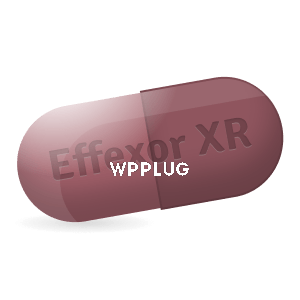
Effexor XR
Effexor Extended-Release is used for treating depression, panic disorder, generalized or social anxiety disorder.
| Product dosage: 150mg | |||
|---|---|---|---|
| Package (num) | Per pill | Price | Buy |
| 30 | $1.73 | $52.00 (0%) | 🛒 Add to cart |
| 60 | $1.27 | $104.00 $76.00 (27%) | 🛒 Add to cart |
| 90 | $1.10 | $156.00 $99.00 (37%) | 🛒 Add to cart |
| 120 | $1.02 | $208.00 $123.00 (41%) | 🛒 Add to cart |
| 180 | $0.94 | $312.00 $169.00 (46%) | 🛒 Add to cart |
| 270 | $0.89 | $468.00 $241.00 (49%) | 🛒 Add to cart |
| 360 | $0.86
Best per pill | $624.00 $310.00 (50%) | 🛒 Add to cart |
| Product dosage: 75mg | |||
|---|---|---|---|
| Package (num) | Per pill | Price | Buy |
| 30 | $1.57 | $47.00 (0%) | 🛒 Add to cart |
| 60 | $1.10 | $94.00 $66.00 (30%) | 🛒 Add to cart |
| 90 | $0.93 | $141.00 $84.00 (40%) | 🛒 Add to cart |
| 120 | $0.87 | $188.00 $104.00 (45%) | 🛒 Add to cart |
| 180 | $0.78 | $282.00 $141.00 (50%) | 🛒 Add to cart |
| 270 | $0.72 | $423.00 $195.00 (54%) | 🛒 Add to cart |
| 360 | $0.70
Best per pill | $564.00 $253.00 (55%) | 🛒 Add to cart |
Synonyms
| |||
Similar products
Effexor XR: Sustained Relief for Major Depressive Disorder
Effexor XR (venlafaxine hydrochloride) is an extended-release antidepressant belonging to the serotonin-norepinephrine reuptake inhibitor (SNRI) class. It is specifically formulated to provide continuous, 24-hour delivery of the active ingredient, maintaining stable plasma concentrations and supporting consistent therapeutic effect. This medication is indicated for the treatment of major depressive disorder (MDD), generalized anxiety disorder (GAD), social anxiety disorder, and panic disorder. Its dual mechanism offers a broader neurochemical approach compared to SSRIs, potentially benefiting patients with inadequate response to first-line treatments. Proper diagnosis and ongoing medical supervision are essential for safe and effective use.
Features
- Extended-release capsule formulation for once-daily dosing
- Available in 37.5 mg, 75 mg, and 150 mg strengths
- Contains venlafaxine hydrochloride as the active pharmaceutical ingredient
- Designed for gradual release over approximately 24 hours
- FDA-approved for multiple psychiatric indications
- Requires prescription and medical oversight
Benefits
- Provides sustained relief from depressive symptoms through balanced neurotransmitter modulation
- Reduces anxiety and panic symptoms by affecting both serotonin and norepinephrine pathways
- Minimizes peak-trough fluctuations in drug levels, supporting tolerability
- May offer efficacy in cases of treatment-resistant depression
- Once-daily dosing supports adherence and routine
- Improves overall functional capacity and quality of life in responders
Common use
Effexor XR is primarily prescribed for the management of major depressive disorder in adults, characterized by persistent low mood, loss of interest, sleep disturbances, and impaired daily function. It is also widely used in the treatment of generalized anxiety disorder, social anxiety disorder, and panic disorder with or without agoraphobia. Off-label uses may include management of certain neuropathic pain conditions, vasomotor symptoms of menopause, and obsessive-compulsive disorder, though evidence supporting these uses varies. Treatment should always be guided by a thorough clinical assessment.
Dosage and direction
The recommended starting dose for Effexor XR in major depressive disorder is 37.5 mg or 75 mg once daily, taken with food at approximately the same time each day. Dosage may be increased in increments of up to 75 mg per day at intervals of no less than 4 days, depending on tolerability and therapeutic response. The maximum recommended dose is 225 mg per day for depression, though some indications may allow higher doses under close supervision. Capsules should be swallowed whole; they must not be crushed, chewed, or placed in water. Abrupt discontinuation should be avoided; tapering is recommended under medical guidance.
Precautions
Patients should be monitored for clinical worsening, suicidality, or unusual changes in behavior, especially during the initial months of therapy or after dosage changes. Effexor XR may increase blood pressure; regular monitoring is advised. Caution is recommended in patients with a history of seizures, bipolar disorder, glaucoma, or renal/hepatic impairment. Use during pregnancy only if clearly needed; neonates exposed late in the third trimester may experience complications. Patients should avoid alcohol and use caution when driving or operating machinery until they know how the medication affects them.
Contraindications
Effexor XR is contraindicated in patients with known hypersensitivity to venlafaxine or any component of the formulation. It must not be used concomitantly with monoamine oxidase inhibitors (MAOIs) or within 14 days of discontinuing MAOI treatment due to the risk of serotonin syndrome. Avoid use in patients with uncontrolled narrow-angle glaucoma and in those with severe hepatic impairment based on Child-Pugh criteria.
Possible side effects
Common side effects include nausea, headache, drowsiness, dry mouth, dizziness, insomnia, constipation, sweating, and nervousness. Sexual dysfunction, increased blood pressure, and appetite changes may also occur. Less frequently, patients may experience blurred vision, tachycardia, weight changes, or abnormal dreams. Serious side effects include serotonin syndrome, hyponatremia, abnormal bleeding, angle-closure glaucoma, and manic episodes. Any unusual or severe symptoms should be reported immediately to a healthcare provider.
Drug interaction
Effexor XR has significant interaction potential. Concomitant use with MAOIs is contraindicated. Use with caution alongside other serotonergic drugs (e.g., SSRIs, tramadol, triptans) due to increased risk of serotonin syndrome. It may enhance the effects of warfarin and other anticoagulants. Medications that inhibit CYP2D6 (e.g., quinidine, fluoxetine) can increase venlafaxine concentrations. Concurrent use with NSAIDs or aspirin may increase bleeding risk. Avoid with linezolid, intravenous methylene blue, and St. John’s wort.
Missed dose
If a dose is missed, it should be taken as soon as remembered unless it is close to the time of the next scheduled dose. In that case, the missed dose should be skipped and the regular dosing schedule resumed. Doubling the dose is not recommended. Patients should contact their healthcare provider with questions regarding missed doses, especially if experiencing withdrawal symptoms such as dizziness, anxiety, or irritability.
Overdose
Symptoms of overdose may include dizziness, sedation, tachycardia, changes in ECG intervals, seizures, or serotonin syndrome. In cases of suspected overdose, seek immediate medical attention or contact a poison control center. Treatment is supportive and may include activated charcoal, ECG monitoring, and management of symptoms. There is no specific antidote for venlafaxine overdose.
Storage
Store at room temperature (20–25°C or 68–77°F), in a dry place, away from light and moisture. Keep the bottle tightly closed and out of reach of children and pets. Do not store in bathrooms or near sinks. Dispose of unused or expired medication through a medicine take-back program or according to FDA guidelines.
Disclaimer
This information is intended for educational purposes and does not replace professional medical advice, diagnosis, or treatment. Always consult a qualified healthcare provider before starting, changing, or discontinuing any medication. Individual response to Effexor XR may vary. Only a licensed medical professional can determine the appropriateness of this product based on a patient’s specific health status and history.
Reviews
Clinical studies and meta-analyses support the efficacy of Effexor XR in reducing symptoms of depression and anxiety, with many patients reporting improved mood, energy, and social functioning. Some users note initial side effects such as nausea or sleep disturbances, which often subside with continued use. Withdrawal symptoms upon discontinuation are a commonly reported concern. Overall, it is regarded as an effective option for individuals who have not responded adequately to SSRIs. Patient experiences vary, and outcomes depend on individual physiology, comorbid conditions, and adherence to prescribed treatment.