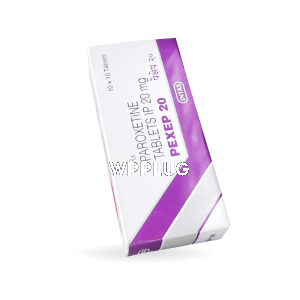
Pexep
| Product dosage: 10mg | |||
|---|---|---|---|
| Package (num) | Per pill | Price | Buy |
| 90 | $0.58 | $52.00 (0%) | 🛒 Add to cart |
| 120 | $0.55 | $69.33 $66.00 (5%) | 🛒 Add to cart |
| 180 | $0.51 | $104.00 $92.00 (12%) | 🛒 Add to cart |
| 270 | $0.48 | $156.00 $130.00 (17%) | 🛒 Add to cart |
| 360 | $0.43
Best per pill | $208.00 $155.00 (25%) | 🛒 Add to cart |
| Product dosage: 20mg | |||
|---|---|---|---|
| Package (num) | Per pill | Price | Buy |
| 60 | $0.70 | $42.00 (0%) | 🛒 Add to cart |
| 90 | $0.66 | $63.00 $59.00 (6%) | 🛒 Add to cart |
| 120 | $0.60 | $84.00 $72.00 (14%) | 🛒 Add to cart |
| 180 | $0.55 | $126.00 $99.00 (21%) | 🛒 Add to cart |
| 270 | $0.50 | $189.00 $135.00 (29%) | 🛒 Add to cart |
| 360 | $0.45
Best per pill | $252.00 $162.00 (36%) | 🛒 Add to cart |
Synonyms | |||
Pexep: Advanced SSRI Therapy for Major Depressive Disorder
Pexep represents a significant advancement in the pharmacological management of Major Depressive Disorder (MDD) and associated anxiety conditions. As a selective serotonin reuptake inhibitor (SSRI) containing the active ingredient escitalopram oxalate, it operates by precisely modulating serotonin levels in the central nervous system, a neurotransmitter critically implicated in mood regulation. This medication is distinguished by its enantiomerically pure formulation, offering a refined mechanism of action with potentially improved tolerability profiles compared to earlier antidepressant classes. Clinicians favor Pexep for its established efficacy in achieving remission and its utility in both acute phase treatment and long-term maintenance therapy, supported by extensive clinical data and neuropharmacological research.
Features
- Active Pharmaceutical Ingredient: Escitalopram oxalate
- Pharmacological Class: Selective Serotonin Reuptake Inhibitor (SSRI)
- Available Dosage Forms: Film-coated tablets (5 mg, 10 mg, 20 mg)
- Bioavailability: Approximately 80% following oral administration
- Time to Peak Plasma Concentration (Tmax): 5 hours post-dose
- Elimination Half-Life: 27-32 hours (steady-state)
- Protein Binding: ~56%, primarily to albumin
- Metabolism: Hepatic, primarily via CYP2C19, CYP3A4, and CYP2D6 isoenzymes
- Excretion: Primarily renal (8% as unchanged drug), with fecal elimination of metabolites
Benefits
- Achieves significant improvement in Montgomery-Åsberg Depression Rating Scale (MADRS) scores, often within 1-2 weeks of initiation.
- Demonstrates high response and remission rates in both moderate and severe Major Depressive Disorder.
- Exhibits a favorable side effect profile with lower incidence of anticholinergic, cardiovascular, and sedative effects compared to tricyclic antidepressants.
- Provides effective anxiolytic benefits, making it suitable for comorbid depression and anxiety disorders.
- Supports long-term maintenance therapy with sustained efficacy and a well-characterized safety profile.
- Offers once-daily dosing convenience, enhancing patient adherence and treatment consistency.
Common use
Pexep is primarily indicated for the acute and maintenance treatment of Major Depressive Disorder in adults. Its therapeutic application extends to the management of Generalized Anxiety Disorder (GAD), Panic Disorder with or without agoraphobia, and Social Anxiety Disorder (Social Phobia). Off-label uses, based on clinical evidence and specialist consensus, may include adjunctive therapy in obsessive-compulsive disorder, post-traumatic stress disorder, premenstrual dysphoric disorder, and vasomotor symptoms associated with menopause. Treatment decisions should always be based on a comprehensive psychiatric assessment and consideration of the individual patient’s symptom profile, medical history, and treatment response patterns.
Dosage and direction
Initial Treatment: The recommended starting dosage for most adults is 10 mg once daily, administered in the morning or evening, with or without food. Based on individual patient response and tolerability, the dosage may be increased to a maximum of 20 mg daily after a minimum of one week.
Dosage Adjustment: For elderly patients (65 years and older) or those with hepatic impairment, the recommended initial dose is 5 mg daily. The maximum recommended dose for these populations is 10 mg daily. No dosage adjustment is typically required for patients with mild to moderate renal impairment.
Administration: Tablets should be swallowed whole with water and not chewed or crushed. Consistency in daily administration time is recommended to maintain stable plasma concentrations.
Treatment Duration: Antidepressant effects may not be evident for 1-4 weeks. Continued treatment for at least 6 months after symptom remission is generally recommended to consolidate therapeutic gains. Long-term maintenance therapy may be indicated for patients with recurrent depressive episodes.
Precautions
- Suicidal Ideation: Monitor all patients, particularly adolescents and young adults, for emergence or worsening of depression, suicidal thoughts, or unusual changes in behavior, especially during initial treatment and dosage adjustments.
- Serotonin Syndrome: Be vigilant for symptoms including agitation, hallucinations, coma, tachycardia, labile blood pressure, hyperthermia, hyperreflexia, incoordination, nausea, vomiting, or diarrhea, particularly when used with other serotonergic drugs.
- Discontinuation Syndrome: Abrupt cessation may lead to dizziness, sensory disturbances, agitation, anxiety, nausea, and sweating. Taper gradually under medical supervision.
- Bleeding Risk: SSRIs may increase the risk of bleeding events, especially gastrointestinal bleeding. Use with caution in patients taking NSAIDs, aspirin, warfarin, or other anticoagulants.
- Hyponatremia: SSRI use has been associated with syndrome of inappropriate antidiuretic hormone secretion (SIADH), particularly in elderly patients, those taking diuretics, or those who are volume depleted.
- Activation: Some patients may experience anxiety, insomnia, panic attacks, or agitation, particularly during the initial treatment phase.
Contraindications
- Hypersensitivity to escitalopram, citalopram, or any excipients in the formulation
- Concurrent use with monoamine oxidase inhibitors (MAOIs) or within 14 days of discontinuing MAOI therapy
- Patients taking pimozide
- Known congenital long QT syndrome or significant cardiac arrhythmias
- Severe hepatic impairment
- Pregnancy, unless clearly necessary and with thorough risk-benefit discussion (Category C)
Possible side effect
Very Common (≥1/10): Nausea, headache, dry mouth, insomnia, somnolence, increased sweating
Common (≥1/100 to <1/10): Diarrhea, constipation, vomiting, fatigue, dizziness, anxiety, agitation, decreased libido, anorgasmia, ejaculation disorder, appetite changes
Uncommon (≥1/1,000 to <1/100): Sinusitis, rhinitis, yawning, tachycardia, palpitations, postural hypotension, blurred vision, tinnitus, weight changes, rash, pruritus
Rare (≥1/10,000 to <1/1,000): Hallucinations, mania, confusion, convulsions, angle-closure glaucoma, hepatitis, abnormal bleeding, hyponatremia, serotonin syndrome
Very Rare (<1/10,000): QT prolongation, torsades de pointes, suicidal ideation and behaviors, neuroleptic malignant syndrome-like events, cutaneous allergic reactions including Stevens-Johnson syndrome
Drug interaction
- MAOIs: Contraindicated due to risk of serotonin syndrome; allow 14-day washout period
- Serotonergic Drugs: Increased risk of serotonin syndrome with tramadol, triptans, other SSRIs/SNRIs, tricyclic antidepressants, fentanyl, lithium, tryptophan, and St. John’s Wort
- CNS Depressants: Enhanced sedative effects with alcohol, benzodiazepines, opioids, and sedating antihistamines
- Anticoagulants/Antiplatelets: Increased bleeding risk with warfarin, NSAIDs, aspirin, clopidogrel
- QT-Prolonging Drugs: Additive effects with antiarrhythmics (Class IA and III), antipsychotics, antibiotics (macrolides, fluoroquinolones)
- CYP Inhibitors/Inducers: CYP2C19 inhibitors (omeprazole, fluconazole) may increase escitalopram levels; CYP inducers (rifampicin, carbamazepine) may decrease levels
- Metoprolol: May increase metoprolol concentrations
- Digoxin: Case reports suggest potential interaction requiring monitoring
Missed dose
If a dose is missed, it should be taken as soon as remembered on the same day. If it is near the time for the next scheduled dose, the missed dose should be skipped and the regular dosing schedule resumed. Patients should not take a double dose to make up for a missed dose. Consistent daily administration is important for maintaining therapeutic plasma levels, so patients should be counseled on establishing a routine and using reminder systems if necessary.
Overdose
Symptoms: Dizziness, sweating, nausea, vomiting, tremor, somnolence, sinus tachycardia, amnesia, confusion, coma, convulsions, respiratory depression, ECG changes (including QT prolongation), electrolyte disturbances, and rhabdomyolysis.
Management: There is no specific antidote. Provide supportive care and symptomatic treatment. Gastric lavage may be considered if performed soon after ingestion. Activated charcoal may be administered. Monitor cardiac function continuously with ECG for at least 24 hours. Manage seizures with benzodiazepines; arrhythmias with appropriate antiarrhythmics. Forced diuresis, dialysis, and hemoperfusion are not effective due to high protein binding and large volume of distribution.
Storage
Store at room temperature (15-30°C or 59-86°F) in the original container to protect from light and moisture. Keep tightly closed and out of reach of children and pets. Do not use after the expiration date printed on the packaging. Do not transfer tablets to other containers, as this may affect stability. Properly dispose of any unused or expired medication through medication take-back programs or according to local regulations.
Disclaimer
This information is provided for educational purposes only and does not constitute medical advice. Pexep is a prescription medication that should only be used under the supervision of a qualified healthcare professional. Treatment decisions must be based on individual patient assessment, and the prescribing physician should be consulted for specific dosage recommendations and management of side effects. The full prescribing information should be reviewed before initiating therapy. Patients should not adjust their dosage or discontinue treatment without medical guidance.
Reviews
Clinical Studies: Multiple randomized controlled trials demonstrate Pexep’s superiority over placebo in achieving response (50% reduction in MADRS scores) and remission (MADRS ≤10) in Major Depressive Disorder. Pooled analysis shows response rates of 60-70% versus 30-40% for placebo at 8 weeks. Long-term studies indicate maintained efficacy with continued treatment over 6-12 months.
Expert Consensus: Treatment guidelines from the American Psychiatric Association and World Federation of Societies of Biological Psychiatry position escitalopram as a first-line treatment option for MDD, citing its favorable efficacy-to-tolerability ratio, established safety profile, and evidence base across multiple anxiety disorders.
Patient-Reported Outcomes: Quality of life measures show significant improvement in social functioning, work productivity, and overall well-being. Many patients report meaningful symptom reduction with manageable side effects, though individual experiences vary considerably.
Comparative Effectiveness: Meta-analyses suggest possibly superior efficacy and faster onset of action compared to some other SSRIs, though head-to-head trials show variable results depending on study design and patient populations.